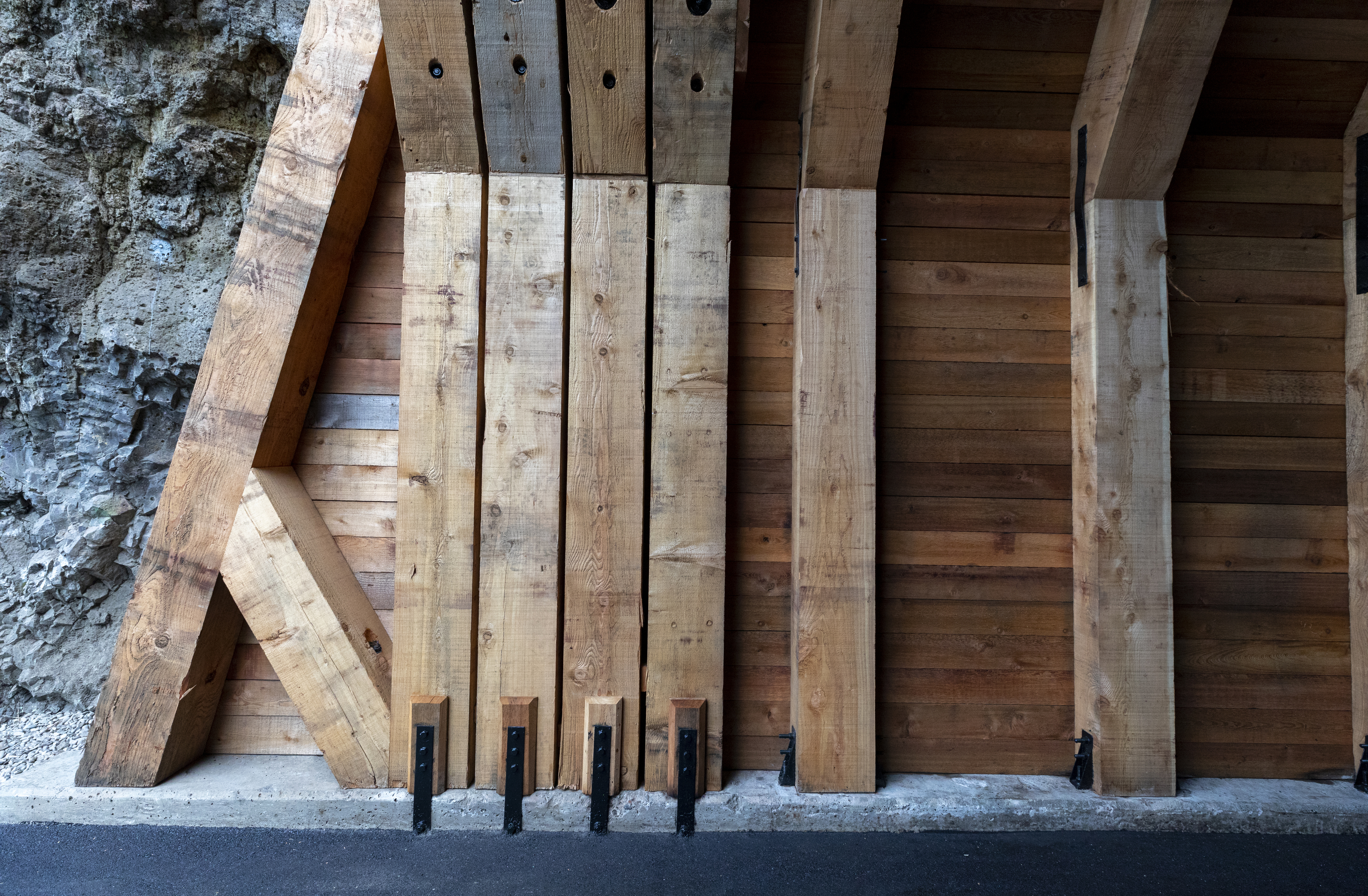
Temporary support, holding the weight while the permanent structure is built.
The transition is the work
Temporary support, holding the weight while the permanent structure is built.
A founder in her late sixties knows it's time to start stepping back, but the next generation isn't ready, or isn't aligned on who leads.
A second-generation owner has three children in the business and one outside it, and the fairness question has no clean answer.
An owner looks at his senior team and realizes the person who should take over doesn't exist yet, and won't, without a deliberate plan to build them.
A husband-and-wife team has been quietly wondering whether the right next chapter isn't a family successor at all, but the employees who helped build this.
They've talked to their accountant. They've met with an estate planner. They've had at least one conversation with a banker about what the business might be worth. The documents are drafted, or close to it. The plan, on paper, looks reasonable.
not one transfer.
two.
The shares move. The operating capacity doesn't.
The transfer of ownership — shares, equity, tax structure, legal instruments — is well served by the existing professional ecosystem. Lawyers, accountants, wealth advisors, bankers. It is hard, but it is knowable.
The transfer of leadership is not. Judgment, relationships, operating instinct, the thousand unwritten decisions the current owner makes every week without thinking about them. That transfer follows a different timeline, requires different work, and is almost never complete on the day the ownership paperwork closes.
Most succession plans conflate the two, and the business spends three years discovering what was never transferred.
Your business has been built around your judgment, your relationships, your feel for the work. None of that transfers with a stock certificate.
It has to be surfaced, named, distributed, and practiced while you're still there to catch what gets missed. Succession planning that skips this phase isn't a plan. It's a handoff into open air.
The diagnostic sometimes reveals that the successor the owners have been assuming is the right one isn't. Or isn't yet. Sometimes it reveals that the path forward is employee ownership rather than family succession, or a hybrid neither side had fully considered. Sometimes it reveals that the timeline everyone has been working toward is three years too short.
We say so. Before the structure gets built around the wrong answer, and before the money is spent building it.
That is what the diagnostic is for. We map what has to transfer, to whom, and on what timeline, then we map the gap between the plan on paper and the capacity in the building. The Family Enterprise Quotient is usually the first instrument.
If this is the conversation you're in, start one with us.
Ownership moves on a timeline its own work supports. Leadership moves on a timeline its own work supports. The two are sequenced together, not collapsed into one.
The husband and wife wondering whether the right successor might be their employees find out before they've spent two years grooming a child who doesn't want it. The owner without a bench starts building one while there's still time. The founder in her late sixties steps back on a schedule the business can absorb.
Succession is difficult. What good succession avoids is the predictable failure: the day the paperwork closes and the capacity to run the business is still in the wrong room.
We respect the difference.
An initial call with a senior Aven advisor is the fastest way to understand whether Aven is the right fit and what a first step would look like. There is no cost and no pressure.
Start a conversationThe Family Enterprise Quotient is a structured assessment that maps the governance, relational, and strategic dynamics in your enterprise. Many owners take it before deciding whether to engage an advisor at all. It will tell you something true about the system you're inside.
Take the FEQThe paperwork closes the deal.
The work closes the gap